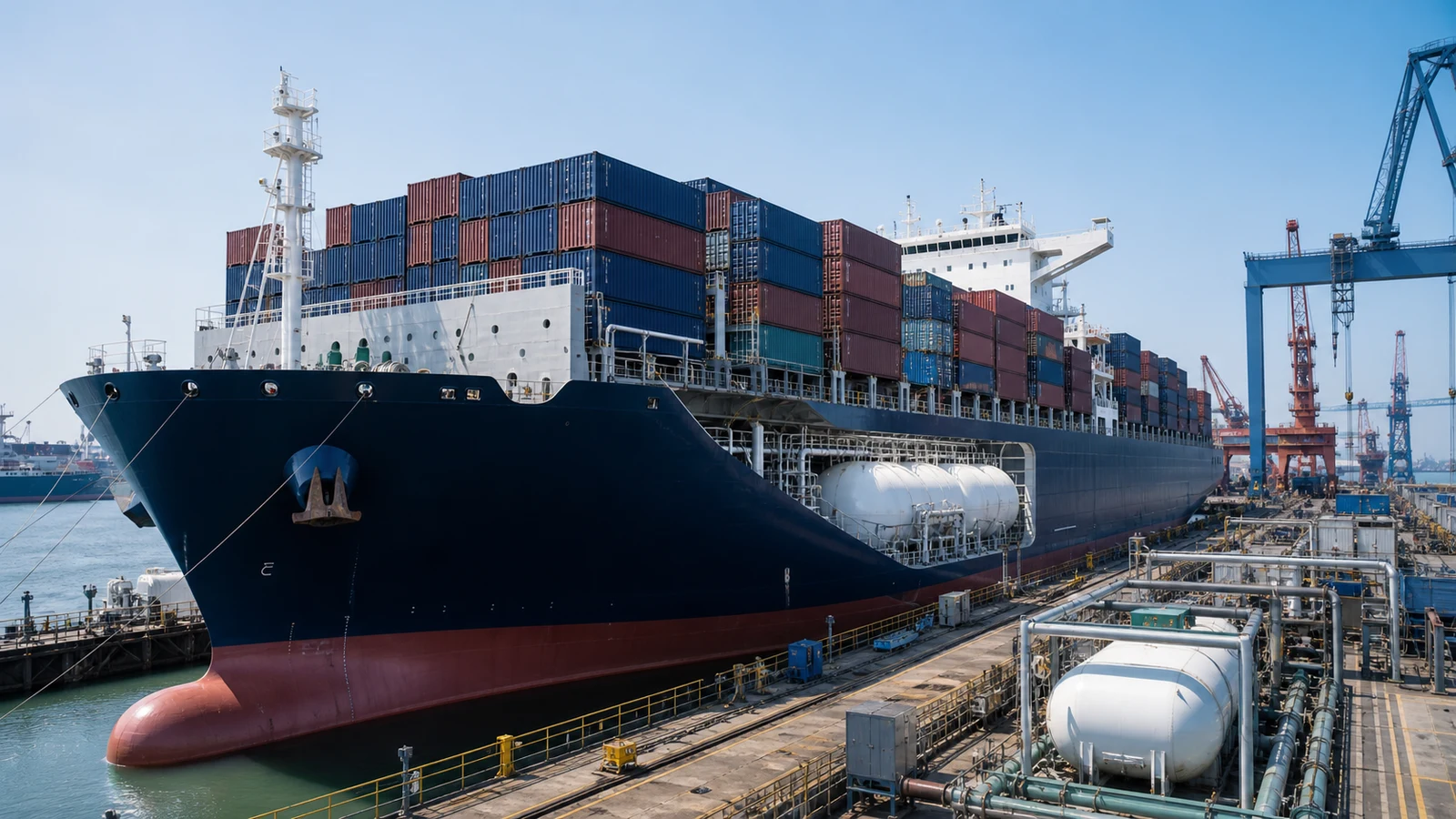
On April 30, 2026, OOCL announced shipbuilding contracts for twelve 13,600 TEU LNG dual-fuel container vessels with Hudong-Zhonghua Shipbuilding. For owners watching China’s newbuilding market, this is more than one carrier’s fleet renewal decision. It is a signal that green propulsion, fuel flexibility and supplier integration are becoming central to yard selection.
Why this order matters
OOCL described the order as part of its green transition and fleet diversification. The vessels will add LNG dual-fuel capability to the carrier’s fleet, and the order reinforces Hudong-Zhonghua’s position in high-specification container ship construction. For the wider market, the message is clear: buyers are not only asking whether a yard can build a hull. They are asking whether the yard can integrate a future-facing propulsion package.
Green vessels increase project complexity
LNG dual-fuel, methanol-ready, ammonia-ready and other alternative-fuel concepts all add layers of design, equipment, class approval, supplier coordination and operational risk. The yard must coordinate fuel systems, tanks, safety systems, class documentation, propulsion equipment and commissioning. This makes yard selection more technical and less price-driven.
What this means for owners considering China
For a buyer considering a green or future-fuel vessel in China, the first step should be a structured technical and commercial brief. Vessel type, design maturity, fuel concept, equipment preference, target delivery and financing or guarantee requirements should be clear before approaching yards.
This is also where China Supply Chain Solutions becomes relevant. Green newbuilding is not only about yard selection; it depends on equipment availability, supplier reliability, documentation and technical follow-up.
Do not separate yard slot from technology risk
An available slot is not automatically a good slot if the yard cannot manage the propulsion package. Conversely, a strong yard may require a later delivery window but reduce execution risk. Owners should compare slot timing, technical fit and supplier readiness together.
Planning a green newbuilding or supplier-heavy project?
Nexus Ship can help screen China yard fit, supplier coordination and project pathway for qualified newbuilding discussions.
Explore Newbuild Support