
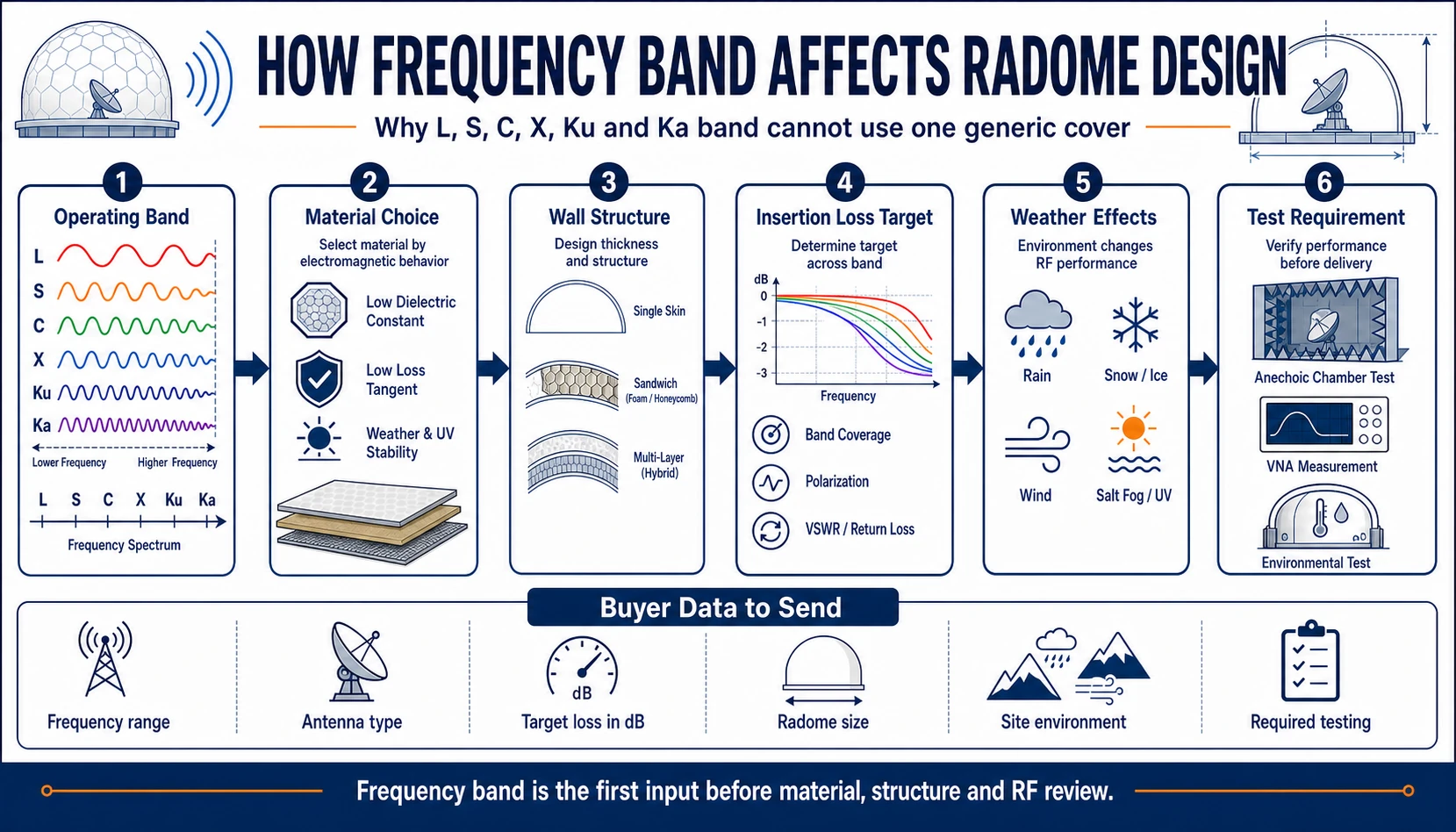
Frequency band is one of the first technical inputs a radome manufacturer needs. A radome is not a generic cover that works the same way for every antenna or radar. The operating band affects material choice, wall structure, insertion loss target, testing method and even how weather conditions are reviewed.
Why frequency band comes first
L, S, C, X, Ku and Ka band systems do not create the same radome design assumptions. The wavelength changes, and the radome wall, material and structure interact with the electromagnetic wave differently.
How frequency affects the design path
| Design area | Why frequency matters |
|---|---|
| Material choice | Different materials have different dielectric behavior and loss characteristics. |
| Wall structure | Single-skin, sandwich, foam core or multi-layer structures may behave differently by band. |
| Insertion loss | The target loss must be reviewed across the operating range, not only at one point. |
| Panel or frame layout | Joints, frame geometry and panel interfaces can affect RF behavior. |
| Weather performance | Rain, wet surface, snow, ice and aging can change practical performance. |
| Testing | Some projects need simulation, sample testing, VNA measurement or chamber review. |
Material choice is not only mechanical
A radome material must handle weather and structure, but it also needs suitable electromagnetic behavior. Composite, foam core, membrane and panel materials are reviewed for RF transparency and stability across the working band.
Wall structure and thickness
A radome wall can be single-skin, sandwich, foam core, honeycomb, membrane-based or multi-layer. The right wall structure depends on project size, RF band, load requirement and manufacturing route.
Weather can change the RF discussion
Outdoor radomes work in real weather, not laboratory conditions only. Rain, wet surface, snow, ice, salt fog, dust and surface aging may affect RF and structural performance.
What buyers should send
- Exact operating frequency range or band.
- Antenna/radar model and datasheet.
- Target insertion loss in dB if specified.
- Antenna size and movement envelope.
- Radome diameter, height and clearance.
- Country, altitude and site environment.
- Whether RF testing, simulation or documentation is required.
Common mistakes
- Asking for a low-loss radome without specifying frequency band.
- Assuming a previous radome design will work for a different band.
- Choosing material before RF review.
- Ignoring wet surface, snow or ice effects.
- Treating RF testing as optional on high-risk projects.
FAQ
Can one radome cover multiple bands?
Sometimes, but it needs review. Multi-band requirements should be stated clearly before quotation.
Can I get a budget quote without exact frequency?
You may get a rough mechanical discussion, but a reliable technical quote needs at least the operating band.
Send frequency data View technical parameters View RF testing