

Many antennas, radar systems and satellite communication systems are sold as packages. In some projects, the protective radome is included. In many real-world situations, it is not.
That is when the buyer starts looking for a standalone radome. This type of enquiry is more specialized than buying a normal enclosure. The buyer may already have the antenna or radar, but still needs a radome that fits the RF band, equipment envelope, site environment and installation conditions.
The right supplier is usually a dedicated radome manufacturer or an authorized overseas team connected to factory engineering, production and installation support.
When customers need a standalone radome
- The antenna or radar has already been selected.
- The original supplier does not include a suitable radome.
- The supplied cover is not suitable for the project site.
- The existing radome is aging, leaking, cracked, corroded or deformed.
- The project needs a different diameter, height or base interface.
- The site has special wind, snow, salt fog, UV or altitude conditions.
- The buyer needs overseas supply and onsite installation coordination.
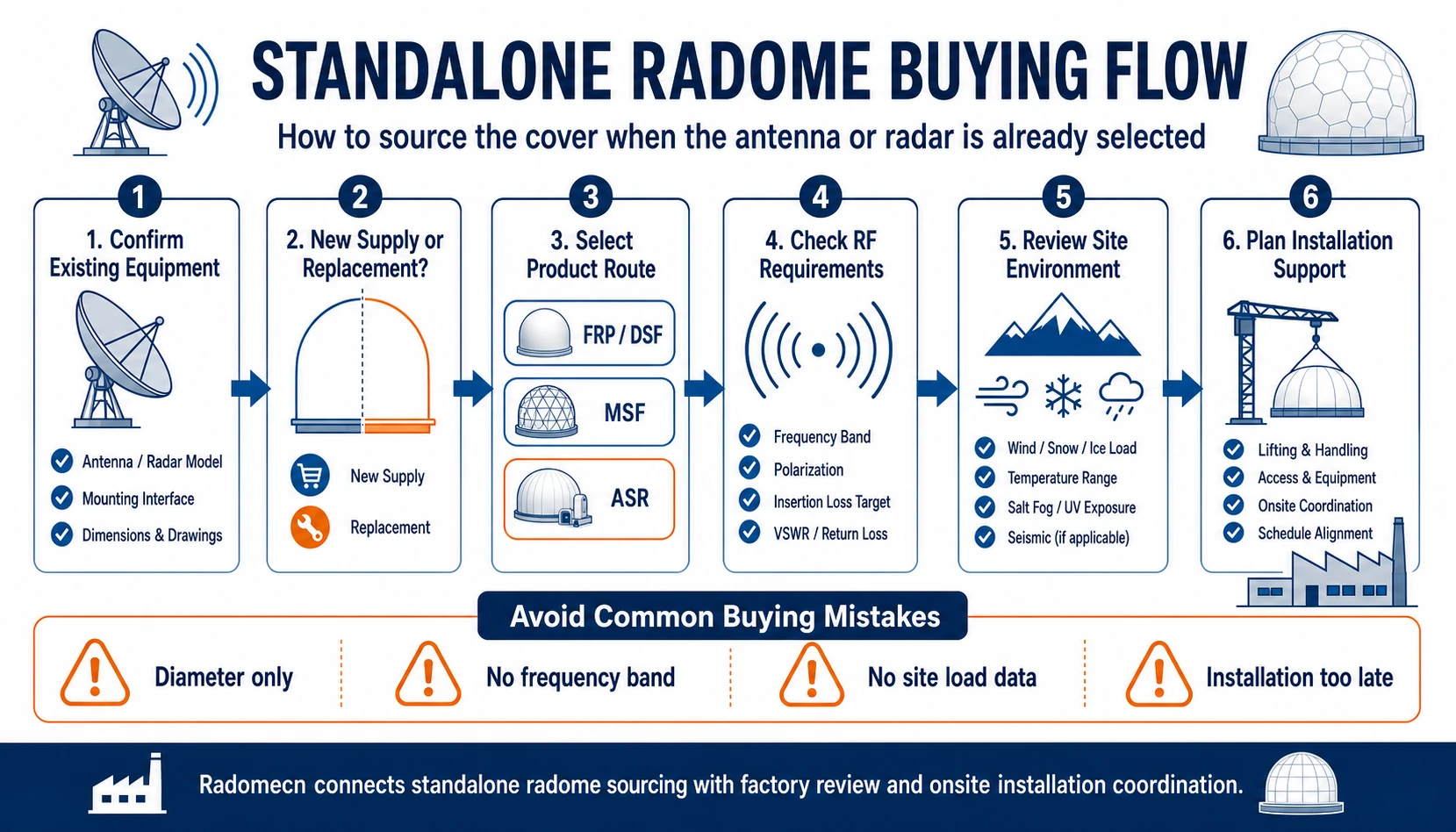
Step 1: define what is already fixed
Before choosing a radome, identify what cannot change. Usually, the fixed items include antenna or radar model, operating frequency band, antenna diameter and height, rotation envelope, existing foundation or base ring, available site space, project country and delivery window.
The radome is then designed or selected around these constraints. If the antenna rotates, scans or requires maintenance clearance, that must be considered before the radome diameter is finalized.
Step 2: decide whether this is new supply or replacement
| Project type | Main starting point | Key risk |
|---|---|---|
| New radome supply | Equipment data and site conditions. | Selecting the wrong structure or RF performance. |
| Radome replacement | Existing radome dimensions and damage condition. | Copying an old problem without improvement. |
| Onsite installation | Site access, lifting and assembly plan. | Installation delay, sealing issue or handover problem. |
For a replacement project, the buyer should not only ask, "Can you make the same size?" A better question is: "Why did the old radome fail, and should the new one improve material, sealing, structure or installation method?"
Step 3: choose the product route
FRP / composite radomes are useful for many antenna, radar, satellite communication and replacement projects where a rigid composite shell, stable outdoor performance and customized size are needed.
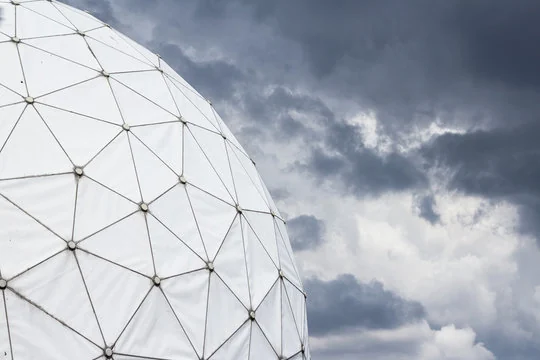
Metal space frame radomes are used for larger structures where modular transport, onsite assembly and structural stiffness matter.
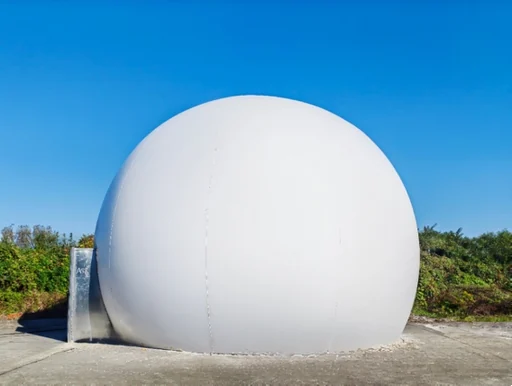
Air-supported radomes are membrane radomes supported by an air control system. They can be suitable for large enclosed antenna sites where pressure support and hoisting installation are part of the project plan.
Application-specific radomes for weather radar, satellite communication and civil aviation / ATC projects may require extra attention to RF performance, documentation, reliability and site downtime.
Step 4: confirm RF requirements early
A standalone radome must not only cover the antenna. It must allow the antenna or radar to perform. Provide frequency band, operating range, insertion loss target if specified, antenna/radar type, and whether the antenna rotates or scans.
Step 5: confirm site environment
A radome is a site-specific product. A coastal satcom site may need corrosion and salt fog consideration. A mountain radar site may need high-altitude, wind, snow, UV and logistics review. A hot desert site may need temperature and UV attention.
Step 6: bring installation into the buying decision
Installation should not be treated as a final detail after the radome is manufactured. FRP radomes may require lifting, sealing and base fastening checks. Metal space frame radomes may require staged assembly and panel installation. Air-supported radomes may require membrane installation, air control setup and pressure checks.
Step 7: check whether the supplier is factory-backed
When buying only the radome, supplier credibility matters. The buyer should understand whether the seller can connect the project with manufacturing, engineering review, testing capability and installation support. Radomecn is positioned as an overseas sales, project coordination and onsite installation channel for specialized Chinese radome manufacturing resources.
Common buying mistakes
- Buying only by diameter and ignoring frequency band.
- Assuming a radome is just a fiberglass shell.
- Treating replacement as a copy job without checking why the old cover failed.
- Forgetting site altitude, wind, snow or corrosion exposure.
- Asking for installation support too late.
- Choosing a product type before the project constraints are clear.
Practical buying checklist
- Equipment type and frequency band.
- Antenna size, height and movement envelope.
- Required radome diameter, height and clearance.
- Insertion loss or transparency target if available.
- Site country, altitude, climate and corrosion exposure.
- Wind, snow, ice and temperature assumptions.
- New supply, replacement or installation scope.
- Foundation, base ring, roof, tower or platform information.
- Transport access and lifting conditions.
- Drawings, photos or old radome information.
FAQ
Can I buy a radome if I did not buy the antenna from you?
Yes. That is the purpose of standalone radome sourcing. The key is to provide enough equipment and site information for review.
Can the same radome design fit different antennas?
Sometimes, but it should not be assumed. Clearance, movement envelope, frequency band and installation interface can be different.
Should I choose FRP, MSF or ASR first?
You can share the project data first. The supplier can then recommend a product route based on size, band, environment and installation method.
Is onsite installation always required?
No. Some customers install locally. But if the project is complex, remote, large-span or replacement-based, installation support should be discussed early.